














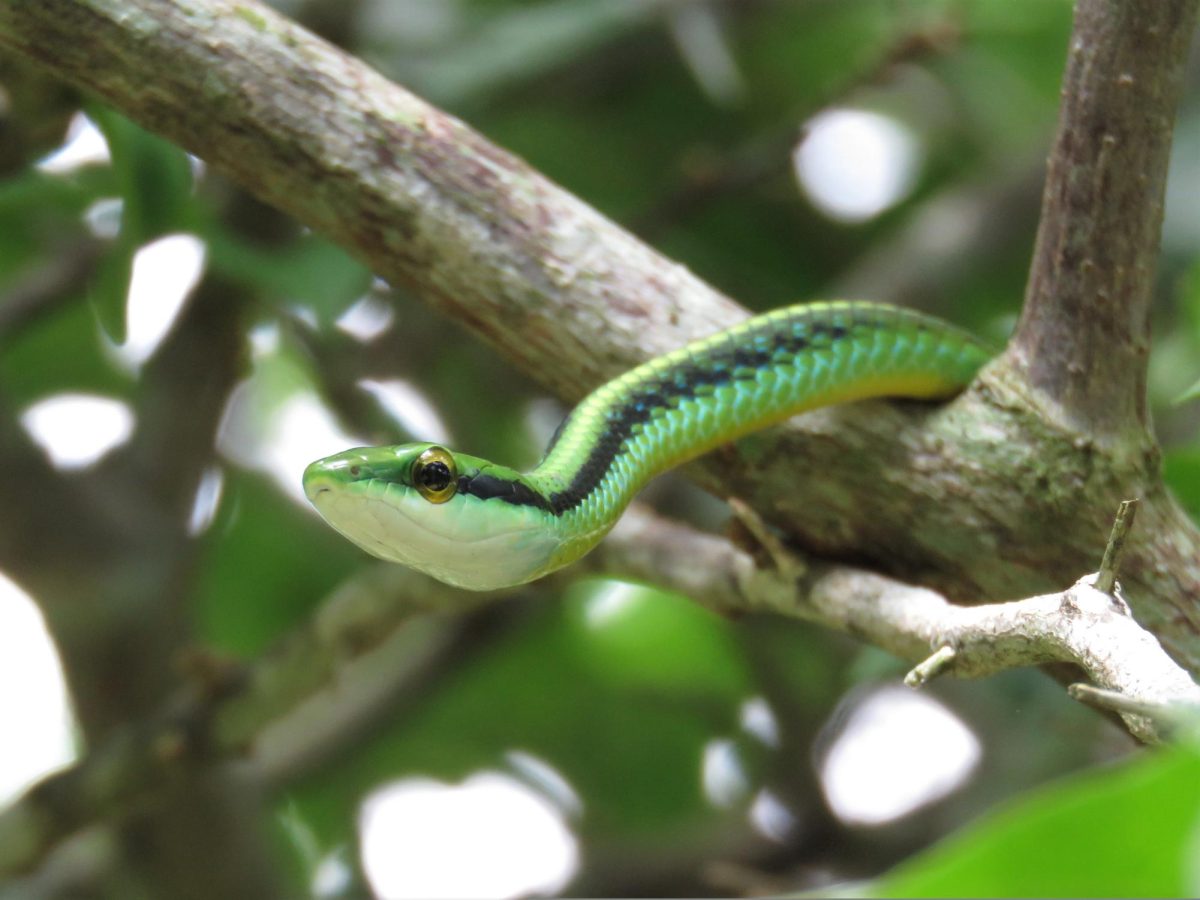
























Snakes are a part of our ecosystem. They eat pests such as mice, rats, squirrels, chipmunks, and so on. Yet, they are often abhorred, demonized, shunned, and so on. This is usually due to a combination of deep-rooted evolutionary biology, cultural conditioning, and misinformation. Snakes are often considered “evil, dangerous, or slimy,” when, in reality, the majority are harmless, and snakes are not slimy whatsoever. Another reason for the fear is misidentification. Many people cannot tell the difference between venomous and non-venomous, and often believe all snakes are dangerous. They also can just find them unsettling or “sneaky.”
There are many distinct features to tell the difference between snakes, which are harmless and which are venomous. Although Pennsylvania doesn’t have as many venomous snakes, there are still a few. The Eastern Copperhead, Timber Rattlesnake, and the Eastern Massasauga. While rattlesnakes are easiest to identify, with their distinct and unique rattles, which they use to warn off threats before striking, in rare cases, they strike and don’t rattle.
Some of the non-venomous snakes include the Eastern Wormsnake, the Kirtland’s snake, the Northern Black Racer, the Northern Ring-Necked Snake, the Garter Snake, and 13 other unique species.
“There are some 2,700 snakes known in the world today. Snakes inhabit all the continents except Antarctica. There are 11 families of snakes in all, five of which have representative species in the United States. Three of the 21 species found in Pennsylvania are venomous,” states the Commonwealth of Pennsylvania, Fish and Boat Commission. Each of the 21 species native to Pennsylvania provides tangible benefits to man and “deserves respect and protection because they are wild animals and a part of the natural heritage of Pennsylvania.”
If you ever come across a snake, don’t get a shovel and cut its head off. It is not considered a humane method of removing a snake. Instead, simply try to relocate the snake. Use something such as a shovel to, instead of decapitation, pick the snake up and move it as far from your yard as you feel is safe. You can also buy snake hooks, which generally cost $10-$30 depending on size, brand, and material. A local, and trusted pet shop, Bark & Branch Pet Supply Company in Meadville sells them for these prices. If you are unable to identify the snake, and assume its venomous, you can either still use a snake hook or shovel to relocate it, or call in a professional to safely relocate it.
Not only is it inhumane to decapitate a snake, but, if it’s venomous, it could also be very dangerous for humans or pets. A Texas man was doing yard work when he spotted a four-foot rattlesnake. He beheaded the snake with a shovel—but when he went to dispose of it, the severed head bit him. According to media reports, the man received a massive dose of the snake’s venom. He became seriously ill and had to be air-lifted to a hospital, where he required a large number of doses of antivenom. The cause of this is due to the fact that snakes—like many other reptiles—retain their reflexes even hours after death. The bite reflex is extremely strong in venomous snakes because their instinct is to deliver one extremely quick move, move away, and wait for their venom to work. Venomous snakes generally don’t want to waste their venom, as it is metabolically expensive for them to regenerate it. The “Refill Process”: A snake’s venom glands are constantly producing and storing venom. If a snake bites or is “milked,” it generally has some venom reserves remaining immediately. Sometimes, when a venomous snake bites, it is a “dry bite,” where they bite but don’t inject any venom. And, despite the myth, baby snakes are just as capable of injecting the same amount of venom as adults. They aren’t “too young to know how much they are injecting,” as they know exactly how much they want to inject.